Wednesday, March 13, 2013

Picky Eaters

Now, today I was teaching a nutrition education workshop and was so happy with the turnout of parents attending!  I hope there's good turnout for this post too, because many, many parents find this topic difficult.  Drumroll please...

GETTING YOUR CHILD (or adult) TO EAT VEGETABLES

I know, little ones will be little ones, but trust me, you've got this in the (grocery) bag.

Here are a few simple tips to get us going...

1. Use dip!  Many kids love raw baby carrots, celery sticks, pepper slices, or broccoli crowns.  They like them even more when there is a dip available (and rightfully so- don't we all?).  You're the caregiver, so you can offer healthy dips in the correct portions.  Perhaps you make a dip of greek yogurt, celery salt, dill seasoning, and low-fat mayonnaise, or maybe you're in a rush, and some simple ranch dressing will do the trick.  Remember, dips make veggies taste better, but we want to be having veggies with some dip, not dip with some veggies.

Photo courtesy of: http://childparenting.about.com/od/nutrition/ss/ideas_for_healthy_after_school_snacks_5.htm

2. Be a role model.  Kids look up to you all day, everyday.  This means that parents and adults who surround children are their role models, and this goes with food too!  When mom, dad, aunt, babysitter, grandmother, cousin, family friend, etc. eat meals with our little ones and express their excitement and enjoyment over eating vegetables, kids catch on!  On the other hand, if we raise children accustomed to adults ordering a double side of french fries instead of a vegetable, children will follow in suite.  Try to be a good role model by choosing vegetables and fruits at meals and snacks.

Photo courtesy of: http://medicmagic.net/how-to-maintain-healthy-lungs.html

3. Have vegetables available in the home.  If vegetables are in abundance in the home, they will become customary, just like cookies and crackers so quickly become a staple in many homes.  If children are used to being offered vegetables as a snack or at meals, vegetables soon become second nature.


4. When cooking or baking, include vegetables more often.  Instead of keeping your usual routine of a vegetable on the side of the plate, can you throw some sauteed peppers in your spaghetti sauce?  Instead of simply chicken burritos, can you add lettuce, tomatoes, onions, or even squash?  Perhaps instead of a typical sweet bread, can you bake oatmeal zucchini bread?  Another great recipe is sweet potato quesadillas.  We don't want to be tricking our little ones too much though, because they are soon going to grow up and be adults.  We want them to be able to make healthful choices themselves.


5. Include children during shopping, cooking, and meal times.  If your young one is old enough and you have the time, including them at the grocery store (I understand this is the most difficult tip) and talking with them about vegetables in the produce section can really intrigue children.  Kids love to learn!  Remember, they love to learn even more when the information comes from you!  So, soak up the moment, and include them at dinner.  Maybe they can set the table or pick out the vegetable serving utensils.  Can then be in charge of telling everyone what is being offered at dinner?  Most little ones love to be included, so let them in!  


6. Start while they're young.  If you have a little one in your life who is still at a young age, this tip is for you.  Incorporating vegetables as a daily habit is much easier when kids are younger.  So take advantage of their young age and expose them to a variety of vegetables while their taste buds and opinions are still forming.

Many more tips to come!  
I'd love to hear your ideas too and what works for you!  
Until next time at the table...

Tuesday, March 12, 2013

Fiber-licious

Hey ya'll!  Ok, "where have I been?" you ask.  Besides being swept away in The Bachelor obsession, my thesis got the best of me!  Just 2.5 weeks until my defense and then The Blue Placemat will be back in full force.  Until then and as I stall to make dinner... let's talk fiber!


Ok- we hear it everywhere.  Fiber is so great and so grand, but what is so good about it?!

We'll talk about the different types of fiber later.  For now, we'll just get the tummy uh-grumblin'.

FIBER can...
1. Lower your cholesterol
2. Keep you full longer
3. Help prevent against cancers (i.e. intestinal)
4. Help maintain steady blood sugars
5. Help promote good colonic bacteria

Ok, now where can we find fiber?  YOU KNOW!  It's basically added in everything now- probably even water for all I know!  (Just kidding... sort of.)

Fiber is naturally (not natural like bags of potato chips are labeled "natural", but like mother nature natural) found in four of the five food groups (excluding dairy): grains, fruits, vegetables, protein

Fiber is...

  • most often associated with grains foods- look for whole wheat/oat/corn/etc. on the ingredient list of grain foods (preferably listed first)
  • found in abundance in fruits and vegetables (think of gas-causing fruits/vegetables, they're loaded with fiber)
  • also found in the protein group.  Not those meats that we tend to picture when we think about protein, but those other protein-rich foods like beans and nuts!


Now that you're a fiber expert, go throw a pot of whole wheat spaghetti on the stove.  Try it!  You'll like it!  See you at the table soon!

Saturday, December 22, 2012

On the run

How many times have you stopped this holiday season mid shopping trip because you're so ravenous or you feel shaky, you'd stop anywhere in the world to get your belly fed?

Well, nevermind the nutrition, the savings you can get by packing a snack and a water to accompany you on your shopping trips or long car rides may be a selling point in itself. Stopping at a fast food establishment, coffee shop, restaurant, or even vending machine to hold you over could cost your wallet some serious money!

You're also more likely to over indulge on larger portions, leading to excessive calorie intake. Meals and snacks out tend to be higher in saturated and trans fat. Saturated fat impacts your LDL cholesterol (aka "bad" cholesterol) byy raising it. Trans fat on the other hand is even worse: it raises your LDL cholesterol and lowers your HDL cholesterol (aka "good" cholesterol). Talk about a double whammy!

What are some easy take along snack ideas to pack?
  • Carrot/celery/pepper slices and hummus
  • Apple with peanut butter
  • Trail mix
  • Crackers with peanut butter
  • Almonds
  • Grapefruit with pistachios
  • Banana with peanuts
  • Mini muffin with an orange

If you can keep your food cold with an ice pack, etc...
  • Cheese stick with mini pretzels
  • Yogurt with granola
  • Cheese cubes with crackers
  • Cottage cheese with tomato
Mix and match your favorite on-the-go snacks and let me know your favorites!

Remember, snack-sized resealable bags help to keep portions in control and keep us from eating those 8 or more servings of nuts!

Until next time at the table.  Thanks for stopping by!

Saturday, December 15, 2012

Perfect Pomegranates

Pomegranates are certainly gaining publicity and popularity!  They're loaded with folate, vitamin C, vitamin K, and copper.  What will all of these great nutrients do for you?

Folate is an extremely important nutrient, especially for pregnant women.  Recommendations encourage women before and during pregnancy to have 400 mcg daily to prevent neural tube defects.

Vitamin C has been shown to reduce the complications and severities of colds, as well as improve immune function, skin health, and fetal development.  Vitamin C also aids in the absorption of iron, so for those iron-deficient folks, including vitamin C at meals when you're consuming iron helps to make sure your body will absorb iron more efficiently!
     Ex: Have a cup of vitamin-C rich, 100% orange juice in the morning with your iron-fortified cereal.  OR Stir-fry iron-rich white beans with vitamin C-loaded red bell peppers (which actually have twice as much vitamin C as an orange).

Vitamin K is the imporant vitamin that helps our blood clot.  We typically think of "clotting" as a bad thing (especially internally), but our bodies need to clot especially if we experience a cut or scrape.  When you hear vitamin K think Clot.

Copper is found in many foods such as seafood, nuts, cocoa, and organ meats.  This nutrient has been linked to proper bone health and a decrease in bone loss as we age.  Most of us don't have to worry about having a copper deficiency since our bodies need very little of this nutrient, so supplementation is not recommended

This video gives you a great step-by-step guide on how to keep your kitchen and clothes clean while getting those pesky little pomegranate seeds out:


You can find pomegranates for about 2 for $3 during this time of year.  Enjoy them on a salad, as a snack with nuts and seeds, sautéed in some whole grain rice, or sprinkled over some yogurt.  Let me know what you think!

Thursday, November 29, 2012

Keep it Cool

Now that the winter months have rolled in, remember that frozen vegetables are just as nutritious as fresh vegetables. Choose plain veggies over those that are in cream or butter sauces and spice them up yourself! Best part is that frozen veggies are usually less expensive in the winter too! Just don't be tempted to pick up the frozen entrees in the supermarket coolers beside those frozen veggies ;-)


Sunday, November 18, 2012

Quick Dinner, SUPER Tasty

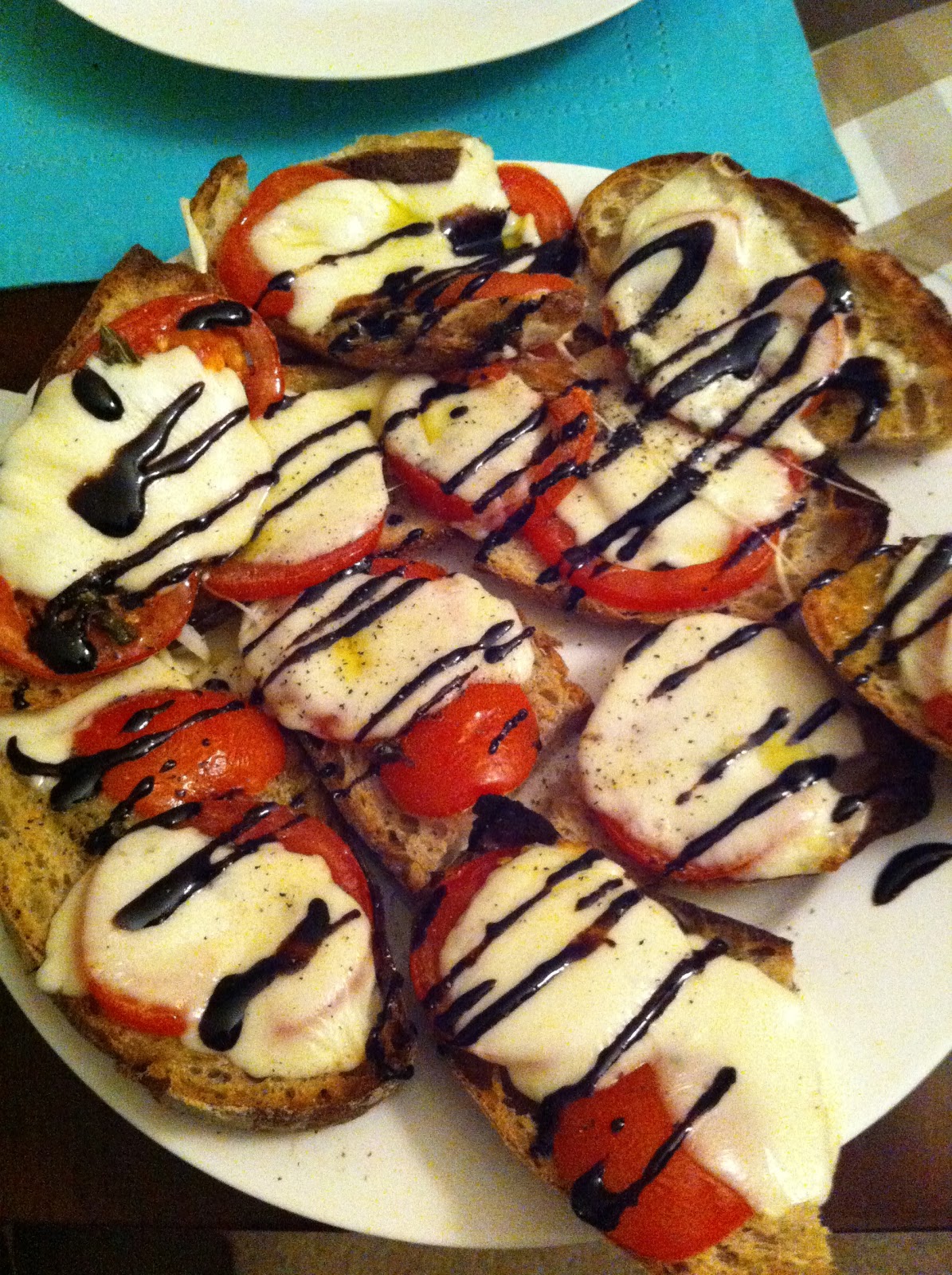
Need something really quick for dinner?  Keep it super tasty with Bruschetta...


A perfect combination of rich, ripe tomatoes, tangy balsamic glaze, calcium-rich mozzarella, and crispy baguette bread- this recipe is waiting for you!

Ingredients
1  baguette, whole wheat italian loaf, or your favorite bread
2-3 vine ripe tomatoes
1/2 package fresh mozzarella (about 1 cup)
2 tablespoons extra virgin olive oil
2 tablespoons balsamic glaze
Salt
Ground pepper


Directions
1. Preheat oven to 400 F. 
2. Slice loaf of bread into as thin or thick slices as you like.  With a serrated knife, slice tomatoes and fresh mozzarella into 1/4" thick slices.
3. On a aluminum foil-lined baking sheet, crisp bread in the oven for 2-3 minutes.
4. Once bread is toasted, remove from the oven and carefully place tomatoes on top of bread.  Layer with mozzarella slices.
5. Re-toast bruschetta slices in the oven for about 5 minutes, or until cheese begins to melt.
6. Remove toast from oven.  Drizzle with extra virgin olive oil and balsamic glaze.  Top with salt and pepper to taste.

Need some help in the kitchen?  Let older kids help by drizzling the balsamic glaze or grinding the pepper over the bruschetta.  They'd love to help you and will be more cooperative with dinner!

Friday, November 2, 2012

Pack It Up, Pack It In

The Blue Placemat Table Talk:

10 extra minutes tonight...


Could save you up to 20 minutes tomorrow morning.

If you just finished dinner and you have leftovers, why not pack some of them up in a larger container and separate a bit for your lunch tomorrow?  This could save you huge steps in the morning, when you may be especially slow-moving and groggy.

While you're at it, wash a piece of fruit and a vegetable to add to your meal.  Gather your lunch together and put it aside in the refrigerator or bag it the night before and refrigerate so you can just grab and go.

  • You may be tired now, but this could save you time and money tomorrow.

"How much money?" you ask...

  • By packing your lunch just 3 times each week, you could save about $18 weekly.  Doesn't seem like such a bargain?  Well, this adds up to save you $72 each month and $936 all year.  
  • If you're really motivated, try to bring your lunch (almost) every day.  By bringing your lunch to work or school 5 days/week, you'll save on average $30/week (usually more), $120/month, and $1,560/year!!!  

PLUS, you'll get to eat EXACTLY what YOU want, and you know that your lunch was made safely and in a clean way.

*Don't be afraid to mix it up.  Bring leftovers from appetizers, salads, hot meal dinners, etc. to mix it up from the same ole' sandwich.  If you're on a sandwich kick and afraid your sandwich will get soggy overnight, pack it so that you can assemble it at work or school, or save your sandwich by adding condiments in the morning to your ready-built sandwich.  This will keep your bread fresh and stomach growling for lunch!

Sunday, October 14, 2012

Family Mealtime

The Blue Placemat Table Talk:


Children of families who regularly eat dinner together are less likely to engage in risky behaviors.  As a family, you can share healthy eating ideas and parents can act as role models at the table.

If you're used to sitting in front of the television either together or separately, unaccustomed to eating meals as a family, etc., then start slow.  Start by setting 1 day aside each week and make that day family dinner night.  If someone in the family works late or can't make it to family dinner, make breakfast your family mealtime.  Turn off the TV and focus on each other and your food.  Increase your nights until your family regularly eats dinner together.  

Not sure how to strike a conversation?  Afraid you'll sit together in silence?
Some helpful conversation starters:
  • What did you learn in school/work today?
  • How was work (clients, employees, etc.)?
  • What did you have for lunch today?
  • The weather is supposed to be ______ this weekend, what are our plans?
  • Today, I learned...
  • Today, I really enjoyed...
  • What was the funniest part of your day?
  • If you knew you were going to be stranded on a desert island, what 3 things would you bring?
  • What is your most embarrassing moment?
  • Do you learn more when you win or when you lose?
  • Does our family seem too busy?  Should we change anything?
  • My dream job/career is...
  • What is your most valued possession and why?
  • Something I wish we could do more of is...

Happy dining!

Sunday, October 7, 2012

Sweet Potato Quesadillas

Hi!  Welcome back and thanks for joining me.  It's a cozy autumn day today with a light sprinkle outside and the deep orange and yellow leaves glowing against the dreary, cloudy sky.

So, let's make tonight's dinner a warm and cozy one that's quick, easy, and super nutritious!

Introducing:  Sweet Potato Quesadillas


Ingredients
1 medium sweet potato (cooked) or 1 15-oz can sweet potato (drained)
1/2 cup canned black beans, rinsed and drained
2 whole wheat tortillas, medium-sized
2 tablespoons tomato salsa
2 tablespoons green, red, or hot pepper (chopped)
2 tablespoons shredded cheddar cheese
Non-stick cooking spray or vegetable oil

Directions

1. If using canned sweet potatoes, be sure to drain and rinse the potatoes in order to remove the sugar from the heavy syrup that it's packed in.


2. In a medium sized bowl or on a cutting board, mash the sweet potato with a fork.


3. In a bowl, mix the sweet potato and black beans.  (Remember: if using canned black beans, be sure to rinse the beans the same way as the canned sweet potatoes.)


4. Add salsa and peppers and mix.  Meanwhile, coat a medium sized pan or skillet with cooking spray or lightly rub with oil and place over medium heat.


5. Spread sweet potato filling on one tortilla.  Add shredded cheese on top.


6. Cover the quesadilla with the other tortilla and slip the quesadilla onto the pre-heated pan or skillet.


7. Cook for 2-3 minutes until the bottom tortilla begins to crisp.  With a wide spatula, turn the quesadilla over and cook for 2-3 minutes more until crisp.


8. Remove the quesadilla from the pan to a cutting board and slice into quarters.


Enjoy for a snack, lunch, dinner, or party platter.  If you have excess filling leftover, use as a dip for tortilla chips and sliced vegetables.

The best part about this recipe is its nutrition and inexpensive cost!  In just half of a quesadilla, you'll get 220% of your Percent Daily Value of Vitamin A which helps to keep your eyes and skin healthy as well as provide antioxidant properties.  (There's that %DV again!)  With its high fiber and protein content you'll stay fuller for longer too.

Cost per serving: $0.90


Yum!  I hope you enjoy!
-The Blue Placemat

Saturday, September 29, 2012

Break It Down Now!

Let's go back and touch base with our favorite Nutrition Facts Label.


Scooting past the calories listed, you'll see a whole boat load of information.  Now, you may be very familiar with these nutrients, vitamins, and minerals listed, however; many people find this list a whirlwind of a mess.
Introducing:  Percent Daily Value


Overall, we want to keep Saturated and Trans fats, cholesterol, and sodium intakes low.  On the other hand, we want to consume foods high in fiber, vitamins A & C, calcium, and iron.  Some of us may look at the protein or the total carbohydrates listed (especially diabetics).  If you're unsure of your recommended intake levels of specific nutrients (for instance, if 5g of fat per serving is high or low), using the percent daily value (% Daily Value or %DV) may be helpful.  The percent daily value is either listed directly after the nutrient or towards the right-hand side of the Nutrition Facts panel.  
The overall, simplified hint states that if the percent daily value is 5% or below, then that food contains a LOW amount of that nutrient per serving.  On the other hand, if the % daily value is 20% or above, then the food is a HIGH source of that nutrient per serving.  This rule applies to all nutrients.  

Examples anyone?


This package lists dietary fiber as 4% of the percent daily value, indicating that the food is low in fiber per serving.  This tells us that if we're looking for a food high in fiber, this item is not our best choice.  (We would want to choose a food with at least 20% daily value for dietary fiber.)

  
In this example, the total fat listed is 2.5g, which provides 4% of the percent daily value.  Being that this %DV is less than 5%, this food is low in total fat per serving, which may be what you're looking for. 


What is the Percent Daily Value exactly?

The percent daily value is a percentage of a nutrient in a food and its comparison to how much you need all day.  An average person's diet is used to determine this value: a 2000 calorie diet with about 65g total fat (22g saturated fat maximum).  Knowing that some of us need more or less than this average diet, our own percent daily values can vary, but as a general indicator about a food and its nutrients, the 5%/20% rule can be quick and easy!

Thanks for pulling up a seat.  See you next time at the table!  


Saturday, September 22, 2012

Tonight's Side Dish: Curly Kale Slaw

Looking for a quick, easy, low-cost, and nutritious side dish for dinner?  Tired of your same old salad and looking to use kale (a SUPER superfood) in a different way?  I knew you were!

Try Curly Kale Slaw tonight:

Kale is loaded with vitamins A and C, which help to keep your skin and eyes healthy.  Kale is a superfood because its loaded with antioxidants that may help prevent against certain types of cancers.  At only 60 calories per 1 cup serving, you can't go wrong with this nutrient-packed side dish.


Curly Kale Slaw
Cost: $3.44 per recipe
$0.34 per serving
Ingredients

8 large kale leaves, washed
2 tablespoons lemon juice (or juice from half of a lemon)
1 garlic clove, peeled and minced (or pressed in a garlic press)
2 tablespoons olive oil
1/4 teaspoon salt
1 medium onion, chopped
2 tablespoons parmesan cheese
1/4 cup walnuts, chopped (optional)

Directions

1. Hold each kale stem with one hand.  With your other hand, gently pull down along the kale stem and remove the kale leaves.  Discard stems.

2. Stack and gather the leaves on a cutting board.  Slice the kale into small strips.
3. Mix the lemon, garlic, olive oil, and salt in a large bowl.  Add kale and onions, and toss.
4. Sprinkle with parmesan cheese and walnuts, if using.


Have the kids help in the kitchen!  They can help to strip the kale leaves off of the stems, or toss the  slaw when needed.  Tried and tested with children myself, you'll be surprised how much they love this side dish, and having them help to prepare it will entice them even more and make them feel more a part of their meal.

PS- This dish keeps very well when covered and refrigerated.  Feel free to make ahead of time for cookouts, parties, dinners, and luncheons to serve as a cool side dish.

Enjoy!

Thursday, September 6, 2012

Quick prep the night before gets your feet up quicker on Fridays

The Farmers' Markets are in abundance, and we have a lot of zucchini, squash, carrots, eggplant, peppers, and onions to get through!  Tomorrow's Friday and if you're looking to eat in, spend just 15 minutes preparing your family's side dish tonight and you'll come home tomorrow and be able to kick up your feet without any dinner worries.

Here is the roasted vegetable recipe I prepared a few weeks ago.  It's full of flavor without any added salt and it's tailored to what you and your family like.

Prepped zucchini, eggplant, carrots,
summer squash, onions, fingerling potatoes,
and red, green, and purple peppers.
Summer Roasted Vegetables

Ingredients
Any and all veggies you and your family love! 
     (How easy is that?!)
Extra Virgin Olive Oil
Basil
Oregano
Rosemary

What to do
1. Cut all veggies into 1/2-inch or 1-inch cubes, julienne-style, etc.  If you're using carrots, zucchini, or other oblong vegetables, sometimes I like to chop them into 1/4-inch thick circles, while also slivering off some slices with a peeler to add some character to the side dish.

2. If you're preparing for a large family or with multiple vegetables, I recommend mixing the vegetables in a large bowl.  If this is a smaller-sized recipe that you're making, a gallon-sized, resealable plastic bag can work to mix and store your vegetables.

3. In a bowl or plastic bag, add all of your chopped vegetables.  Add 1 tablespoon of olive oil at a time and mix until all of the vegetables are evenly coated (this amount of olive oil will vary depending on your recipe size).

4. Add 1 teaspoon dried basil, 1 teaspoon dried oregano, and 1/2 teaspoon dried rosemary for every 1 cup of chopped vegetables as well.  Mix thoroughly.  For the greatest amount of flavor, cover your recipe or seal your bag and let it sit overnight (up to 2 nights) to let it marinate.  Now your prep time is over!

5. When you're ready to cook, preheat the oven to 400 degrees F.  Spray a sheet pan or casserole dish with non-stick cooking spray.  Add the vegetables to the pan.  The vegetables do not have to be in a single layer, but instead can be layered if you do not have enough room (they will still roast well).  Roast for 35-40 minutes, or until vegetables are cooked to your liking.  If you would like to add fresh herbs, add a few leaves of basil or sprigs of rosemary during the last 5-10 minutes of cooking.  For a stronger flavor, add additional basil, oregano, and rosemary to taste just prior to serving. 

Serve with fish, pork, or chicken dishes, or by itself as a fiber-filled vegetable meal by sprinkling with asiago or parmesan cheese and serving over whole-grain rice or Israeli couscous.  

Let me know how you like it and I'd love to hear your own twists on the recipe.  

Enjoy!

Wednesday, September 5, 2012

The Unit Price... aka Math Genius

Welcome back!  Walking through the grocery store, we are bombarded with advertisements, specials, flags, flyers, pamphlets, and even TVs shouting us prices like we're supposed to be experts on a good deal... but now you can be!

First, let's hear comedian Jim Gaffigan's thoughts on the grocery store...

Now since we've been talking money at the grocery store, let's talk...

Unit Price

First of all, what the heck is the unit price?  Many of you may know, but to catch us all up to speed, the unit price is similar to the servings per container on a Nutrition Facts label, but it works with prices.  We look at the servings per container when it is difficult to understand what the company's serving size is (i.e. 2 ounces).  We can better guess what a serving size is by knowing that the box of spaghetti should share between 8 people (8 servings per container).  The unit price is similar, but in terms of money.

So, where is the unit price?  The unit price is usually listed to the left of the actual price of the product on the price tag.  Sometimes the unit price has an orange background, or may be found in very small print listed under the price.


The unit price is the price per ounce(s), gram(s), liter, etc.  The unit price is the price per unit that the company wants to talk in terms of.  This helps us the consumer to determine which size product is the better deal when shopping, or which brand truly is the better buy in terms of cost.


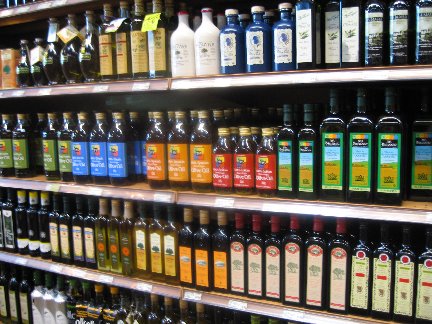
For example, I want to buy olive oil.  Olive oil comes in all different sorts of sizes, bottles, and varieties.  

Next I decide that I want extra virgin olive oil and I find the brand that I want to buy.  This particular brand offers its own million bottle sizes, so I feel like I'm starting back at square one.  No!  I got this in the bag.  The small 16.9oz bottle is listed at $7.49 (unit price $0.44/oz) and the larger 25.4oz bottle is listed at $8.99 ($0.35/oz).  If I don't want to do the math myself, it's listed there for me with the unit price.  The unit price is the $0.44/oz and $0.35/oz prices.  With this, I know that I'm getting a bigger discount by buying the larger bottle, since I'll be paying $0.09 less per ounce of olive oil.


Unit prices come in all different units.  Below you'll see another brand of extra virgin olive oil, listed at $3.49 with a unit price of $26.43/gallon- so we can't compare this unit price with the olive oil unit pricing I listed above.

Okay, maybe they're both loaded with fiber & vitamin C.  We digress...


Now, don't let marketing fool you! Sometimes, unit prices are not listed in the same  units, and therefore, we can't compare them.  Like the old saying goes, "You can't compare apples to oranges."


For example, I see hot chocolate in the store and their prices are similar.  So, I look at their unit price to see which is the better deal.  Unfortunately, one unit price is listed by price per 100 count of hot chocolate packets and the other is listed in price per pound.


It may not seem like a big difference, but if you relied on the unit price in this scenario and did not notice the unit differences, then you'd be comparing $12.90 vs. $2.03, respectively- thinking that by in large the product on the right is a better deal, which is not necessarily true.


In this case, you'd have to look at the two types of hot chocolate- maybe one has marshmallows, maybe one has reduced sugar- so which do you want?

If that doesn't help you decide between boxes, then, you'll have to look on the box and make sure both boxes have the same amount of hot chocolate packets inside.  Since the prices only differ by 2 cents, you want to make sure you're comparing two boxes with the same amount of product in them... and then it's up to you!  If you're comparing the box on the left priced at $1.29 with 10 packets to the product on the right with 5 packets at $1.27, the prices are not close any more.  You'd be paying almost double for the product on the right without knowing it!

 So, when does the unit price not come in handy?  Keep in mind that you want to be realistic in your shopping.  If you buy a larger product because it has a lower unit price, in most cases, it will still cost more.  Remember to stick with your budget!  Also, remember to stick to the realities of your needs.  If you buy in bulk and don't get to the product fast enough, it may spoil.  You'll be losing money when you throw away products.


On the other hand, large families may go through specific products more quickly, so they may benefit by buying in bulk.  This isn't to say that small households can't benefit by shopping with the unit price, but keep your needs in mind when looking at the unit price.  When it comes to staple products and pantry items, you can usually stock up without spoilage occurring as long as you have the space.  If anything, the unit price can help to compare prices between products of minimal size differences to help you get the most out of your hard-earned dollar.

Now, you must be thinking, "this is no typical nutrition student/soon-to-be dietitian with all this hot chocolate talk."  But when it comes to shopping, I want to give you all of the tools for you to make an informed decision no matter the food/product.  We'll get to the healthy stuff later, but we're all going to treat ourselves (and should!) and we should get the best deals on those treats!